
New Book Release 2024: Roots of Slavic Magic Book 1
It’s released!! Ten years of full-time research. Over 500 pages, 274 illustrations, almost 2,000 citations AND an index! Book 1 of 10 volumes of The Roots of Slavic Magic. – Patricia Robin Woodruff
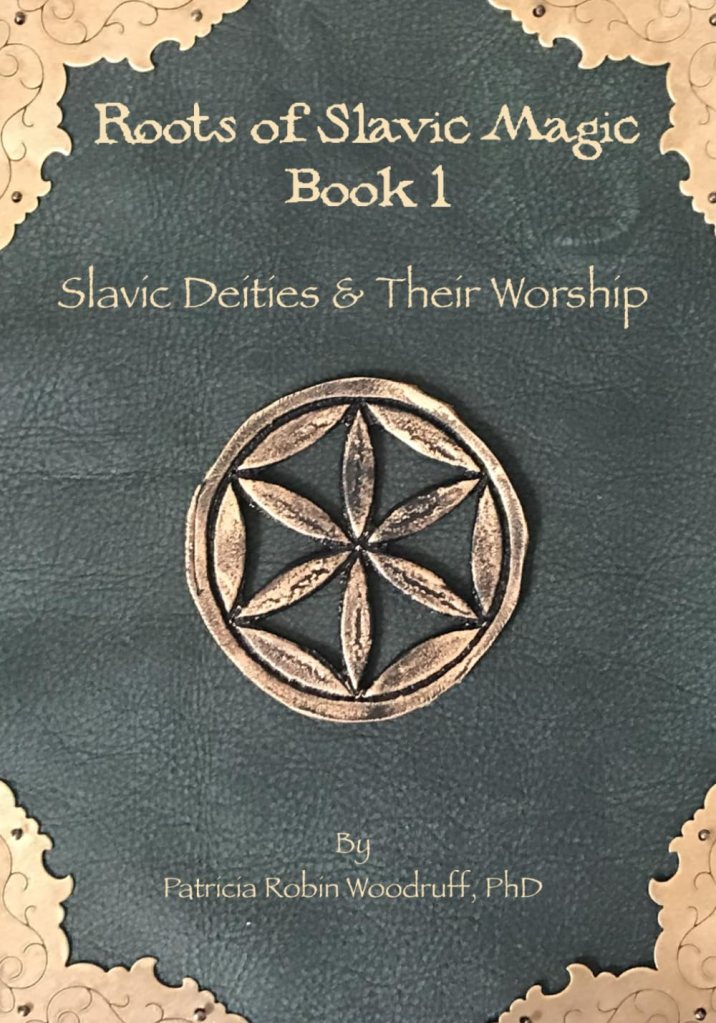
Woodruff reveals exciting new discoveries in this vastly neglected field. Scholars have long overlooked the pre-Christian beliefs in the area of Central Europe because little was written down. Additionally, what studies have been done were distorted by the preconceptions of classical education and the predominantly Judeo-Christian society that sees monotheism as the pinnacle of religious belief. Building on the work of scholars like Ivanov, Toporov, Rybakov and Gimbutas, Woodruff entered these studies as a Pagan priestess with a fresh approach unbounded by nationalist, feminist or patriarchal preconceptions.
This work upends the assumption that religious belief began with “primitive” land spirits, progressed through polytheism and culminated in monotheism. It took looking beyond the languages and borders of countries at the traditions held across the entire eastern part of the European continent and into Asia. Secrets that were hidden in the names of plants, in fairy tales, and archaic holiday traditions form the basis of this work. Woodruff reveals the commonality of beliefs that point to a religious heritage that began before nations formed and languages split. This book is for those of Slavic and Central European heritage seeking to reclaim the indigenous beliefs of their Pagan ancestors. (Includes almost 2,000 Sources.)
Lord of the Mountain: Krakonosh
Written by Patricia Robin Woodruff edited by Kimberly Anne
I would like to tell you about one of the most famous Slavic spirits. He has been described as a giant, a devil, a gnome, an elf, a prince, a satyr, a goblin, and a ghost. Some call him a great spirit. Some refer to him as a great lord. Where else would such a great being live but in the Giant Mountains?!
If you’ve never heard of the Giant Mountains, you may be wondering where they are; or maybe you know of the mountains by their Polish name, the Karkonosze mountains, which forms the border between the Czech Republic and Poland.
It is these huge granite mountains that a giant lives by the nickname of… well… we better not get him angry, so like the Germans, we can respectfully call him the “Lord of the Mountain” which would be “Herr vom Berge” or “Lord John,”which would be Herr Johannes. The Czechs call him Krakonosh after the mountains, but it very well could be those mountains are named after him! In one story he introduces himself as Lord Giantdale.
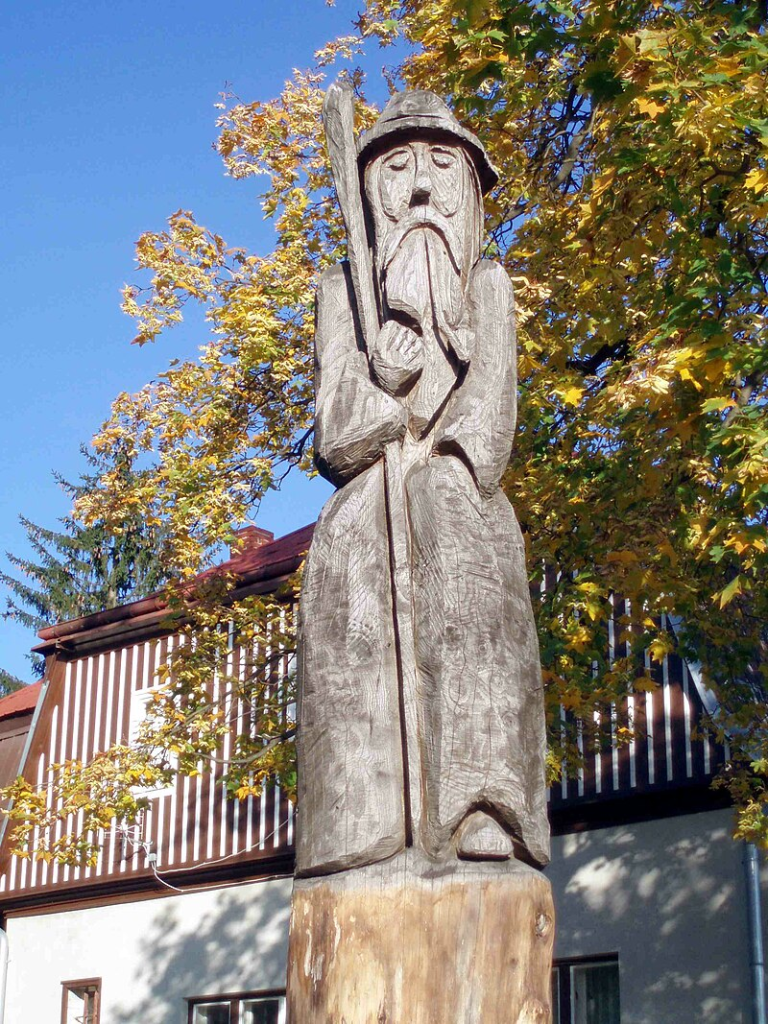
Rubezahl woodcarving in the Polish Giant Mountains
Lord Giantdale or Krakonosh is the spirit of the woods, the mountain and the great caverns and waters under the mountain. Not only is he the “Lord of the Mountain,” but in the times before the Czech Republic when the area was known as Silesia and Bohemia he was called “Fürst der Gnomen”, the Prince of the Gnomes. How can one being have so many different titles? This is because not only can he appear as a giant, but he is a powerful spirit, so he can change his shape to be whatever he wants!
One of the first portraits of him that people know about was made by schoolmaster Martin Helwig in 1561. Mr. Helwig drew a map of the Karkonosze mountains and standing in the mountains is Rü… (Ooops! I almost said that nickname that he hates!) We’ll call him “Duch Gór” which means “The Mountain Spirit.” Anyway, “Duch Gór” is holding a staff and has large antlers, goat feet and a tufted tail. He tends to reward those who are kind and punish those who are cruel or greedy and as always he is a bit mischievous. As the Spirit of the Mountain said in his guise as Lord Giantdale, “My laws are no other than those which Nature has already inscribed on thy heart…”
I will tell you a German story from a book by Charles John Tibbitts called Folk-lore and Legends. These ancient verbal folktales were collected and published by Tibbitts in 1892.
Once upon a time a glazier who was traveling across the mountains, feeling very tired from the heavy load of glass which he was carrying, began to look about to discover a place where he might rest it. Rübe… Ooops! Duch Gór, who had been watching for some time, no sooner saw this than he changed himself into a little mound, which the glazier not long afterwards discovered in his way, and on which, well pleased, he proposed to seat himself. But his joy was not of long countenance, for he had not sat their many minutes before the heap vanished from under him so rapidly, that the poor glazier fell to the ground with his glass, which was by the fall smashed into a thousand pieces.
Upon this, the Mountain Spirit, assuming the appearance of a traveller, accosted him, and inquired why he so lamented, and what was the great sorrow with which he was afflicted. The glazier related to him the whole affair, how that, being weary, he had seated himself upon a mound by the wayside, how this had suddenly overthrown him, and broken to pieces his whole stock of glass, which was well worth eight gold pieces, and how, in short, the mound itself had suddenly disappeared. He declared that he knew not in the least how to recover his loss and bring the business to a good ending. The compassionate mountain sprite comforted him, told him who he was, and that he himself had played him the trick, and at the same time bade him be of good cheer, for his losses should be made good to him.
Upon this the giant transformed himself into an ass, and directed the glazier to sell him at the mill which lay at the foot of the mountain, and to be sure to make off with the purchase-money as quickly as possible. The glazier accordingly immediately bestrode the transformed mountain sprite, and rode him down the mountain to the mill, where he offered him for sale to the miller at the price of ten gold pieces. The miller offered nine, and the glazier, without further haggling, took the money and went on his way.
When he was gone the miller sent his newly purchased beast to the stable, and the boy who had charge of him immediately filled his rack with hay. Upon this the Mountain Spirit exclaimed, “I don’t eat hay. I eat nothing but roasted and boiled, and that of the best.”
The boy’s hair stood on end. He flew to his master, and related to him this wondrous tale, and he no sooner heard it than he hastened to the stable and there found nothing, for his ass and his nine gold pieces were alike vanished.
But the miller was rightly served, for he had cheated in his time many poor people, therefore the Lord of the Mountain had punished in this manner the injustice of which he had been guilty.
Duch Gór is a very powerful spirit and controls all the treasures of the mountains, which gives him another one of his titles, Schatzhüter, the “Treasure Keeper.” His treasure can be healing herbs, a successful hunt, or the gold of the mountain which he gifts to those he deems worthy.
You might think, “He doesn’t sound much like the giants I’ve heard of!” but you’ve probably never heard the tale of Number-Nip. I think I can probably get away with calling him that, since not many people anymore know what a “nip” is, and this is a tale of his strength and justice.
“In the year 1512 a man of noble family, who was a very tyrant and oppressor, had commended one of his vassals or peasants to carry home with his horses and cart an oak of extraordinary magnitude, and threatened to visit him with the heaviest disgrace and punishment if he neglected to fulfill his desires. The peasant saw that it was impossible for him to execute the command of his lord, and fled to the woods with great sorrow and lamentation.

Sculpture of Krakonoš in Hořice
There he was accosted by Number-Nip, the Spirit of the Mountain, who appeared to him like a man, and inquired of him the cause of his so great sorrow and affliction. Upon this the peasant related to him all the circumstances of the case. When Number-Nip heard it he bade him to be of good cheer and care not, but go home to his house again, as him himself would soon transport the oak, as his lord required, into his courtyard.
Scarcely had the peasant got well home again before Number-Nip took the monstrous oak-tree, with its thick and sturdy boughs, and hurled it into the courtyard of the nobleman, and with its huge stem, and its many thick branches, so choked and blocked up the entrance that no one could get either in or out. And because the oak proved harder than their iron tools… the nobleman was compelled to break through the walls in another part of the courtyard, and have a new doorway made, which was only done with great labour and expense.”
In this tale Number-Nip sounds more like your typical giant. You are familiar with traditional giants, right? The incredibly large and powerful ones – the ones that can roar like thunder, tremble the ground, and eat people?! But, in this more “traditional” giant story, what does the name Number-Nip mean? Alright! I’ll tell you. I guess we’re far enough away from his kingdom in the Karkonosze mountains for me to safely say. “Nip” means “turnip,” but you can only call him Number-Nip in private. This is the English translation of the name Rübezahl, which means “Turnip Counter” or the name he really hates, which is Riebezagel which means “Turnip Tail”. You might think, “Well, that’s not so bad of a name!” But he finds it very embarrassing especially since people think it came from a tale where the Lord of the Mountain was tricked.
The tale goes… Number Nip spied the beautiful Princess of Silesia and watched her for a while in the form of a raven. But as we know, he was a master of shape-shifting and couldn’t bear to stay a raven much longer because he was so captivated by the Princess. When he transformed into the form of a young man, he got the full feelings of a young man too. This means he promptly fell in love with her and wanted nothing more than to marry her. When she went to bathe in a beautiful mountain lake, he pulled her into his underground kingdom through a whirlpool. However, the Princess wasn’t keen on this idea of living in his underground kingdom forever, plus she was lonely, missing her old life above ground. The Princess tried to come up with objections as to why should couldn’t marry him. Grasping at straws she pointed out that it wouldn’t feel like a wedding without a lot of people as wedding guests. Krakonosh looked around his underground kingdom and spied a crop of turnips. He told the Princess he could turn them into people and that would give them plenty of wedding guests. The Princess thought quickly and stressed it was very important that she knew exactly how many guests to plan for. She instructed him to count the turnips several times so as to make no mistake. While he was busy carefully counting each and every turnip, she seized the opportunity to escape. So if you know what’s good for you, you should never ever call him Rübezahl, Riebezagel or Liczyrzepa (the Turnip Counting Man).
I’ll have you know that Krakonosh is pretty powerful. He can command the bats and ravens. He can look like an old man with a grizzled beard and a large broad-brimmed hat. He carries an uprooted tree for a staff with the roots forming a curious tangle at the top. If you are thinking, “Wait a minute… that sounds a bit like the wizard Gandalf in The Hobbit!” you’d be right, since J.R.R. Tolkien took the description of the Lord of the Mountain combined him with tales of Odin and turned him into a wizard. So you can see where this intriguing mountain spirit has morphed and changed throughout the stories. In one tale, Krakonosh even detaches his leg and turns it into an axe with which he cuts piles and piles of firewood, all one-legged. In the story this is to punish a greedy landowner by cutting down all his trees and giving the firewood to the workers that the landowner shortchanged.
But in this tale is hidden a secret of Slavic magic for those wise enough to recognize it. For both the Slavs and the Celto-Germanic people used a method of channeling magic called the “Crane stance” or one-eye, one-hand and one-foot. By closing one eye, tucking your hand behind your back and standing on one leg you put half of your body into the Spirit World. Then you are able to channel the energy from the Spirit World into the Mortal World to accomplish magic.
In tales they say Krakonosh even rides a horse that is missing one leg or he rides a huge mountain goat with long curving horns that flies through the sky. The Lord of the Mountain can control the weather causing fierce snow storms but then letting the sun come out and sparkle on the snow like diamonds. He is a trickster in the spring when you think the day is going to be bright and warm and you go out without a coat and next thing you know the wind has come up and the temperature plummets. He can control a roaring whirlwind to punish the unworthy. You never know when you see an animal in the mountains, whether it might be Krakonosh disguised as a wolf, a deer, a boar or a bear.
In Czech fairy tales they will tell you that “Rübezahl” gave people the gift of sourdough and taught them how to make kyselo a staple soup of the area that is full of nutrients and made from sourdough and dried mushrooms. And yet it is possible that people have been making sourdough for the past 6,000 years. And tales of this Lord of the Mountain were already old when schoolmaster Martin Helwig drew him in the late Middle Ages.
And I will tell you a secret… and I know this because I’ve been studying the ancient Pagan deities of these lands. All these tales of the Lord of the Mountain lets me know that this are little bits of pieces left over from when Krakonosh was worshipped as a god going back thousands and thousands of years ago! That little sketch of the horned-figure with goat legs and a tail is not the first drawing of him. It might be the first drawing of him labeled as “Rübezahl” but I have seen other drawings and carvings of him. He is the Lord of the Forests, the Master of the Animals (especially cattle), the God of the Underworld and Lord of Winter. You might know some of his other titles, where he is known as the Slavic god Veles or Weles, the “Wooly One”. There are tales of the Slavic god Dazbog. His title means “The Giving God” and as Hors-Dazbog this may be just another way to title the God of Winter. The “Giving God” is described as lame, sometimes with one eye, and he can also be called the “Master of the Wolves”. Both “Dazbog” and “Veles” are said to be in charge of the treasures under the earth. The Germans knew Veles/Weles as Woden or Odin who is also called Björn, “The Bear” or Valkjósandi, the “One Who Chooses the Fallen Ones”. He also got remembered as Cernunnos, the Horned God, while the Greeks remembered him best as the horned and goat-footed Pan.
As Lord of the Underworld he is connected to underground vegetables, and this could be the reason the Slavic and Celtic peoples carve their Halloween lanterns out of turnips marking the beginning of winter and the time of the Spirits. A similar tradition of turnip lanterns to mark the season of winter is celebrated in the Netherlands on November 11th, now transformed into a tradition of St. Martin who just-so-happens to have a connection to the bear.
At the end of the winter season, we see a traditional event in Spain where a horned-figure associated with cattle is chased from the town by throwing turnips at him. This is an energetic way for the people to expel winter. This would also add legitimacy to the image of “The Sorcerer” as drawn by anthropologist Henri Breuil. The horned and bearded petroglyph is located in a cave in south-western France, near Spain and dates to approximately 13,000 BCE. While some skeptical academics pooh-pooh the legitimacy of this petroglyph, there are tales and carvings in this area that when looked at as a whole show a consistent belief over time. This Spanish Jarramplas festival is carried on by the force of tradition even when they don’t understand its origin, but I think you can see where some of these mysteries are beginning to be revealed.
So follow the conscience of your heart and be kind to strangers because you never know when you might offer hospitality to a hidden giant or a god in disguise!
Patricia Robin Woodruff, PhD is the author of “Woodruff’s Guide to Slavic Deities” which is an easier-to-read summary of the “Slavic Deities & Their Worship: Roots of Slavic Magic series, Book 1.” Both provide new and interesting information on the indigenous beliefs of the lands that we now know as “Slavic”. “Slavic Deities & Their Worship” includes an extensive list of scholarly sources that are cited.
SOURCES:
Adams, Angeline B. “The Sunne Meerten celebration” Turnip Lanterns turnip lanterns.wordpress.com 11 Nov, 2019
Iglesias, Sebastian Diaz. Jarramplas. Tiempo de fiesta en Piornal. La construction de identidades colectivas en torno al ritual. [Jarramplas: a celebration time in Piornal. The construction of collective identities around a ritual] Gazeta de Antropologia [Anthropology Gazette] Vol. 20 (2004)
Janků-Sandtnerová, Marie. Kniha rozpočtů a kuchařských předpisů [Book of Budgets and Recipes] (in Czech). Praha: Česká grafická Unie a.s. [Czech Graphic Union] (1933)
Musaeus, Johann Karl (trans. Mark Lemon). Legends of Number-Nip (1864)
Sayers, Stephen. “The Halloween Feast” Treat or Trick? Halloween in a Globalizing World. Foley & O’Donnell (2009)
Simek, Rudolf. Dictionary of Northern Mythology (1993)
Tibbitts, Charles John. Folk-lore and Legends: Germany (1892)
Presentation To Center on the Belief of Slavic Lands
Previously posted on: swvatoday.com
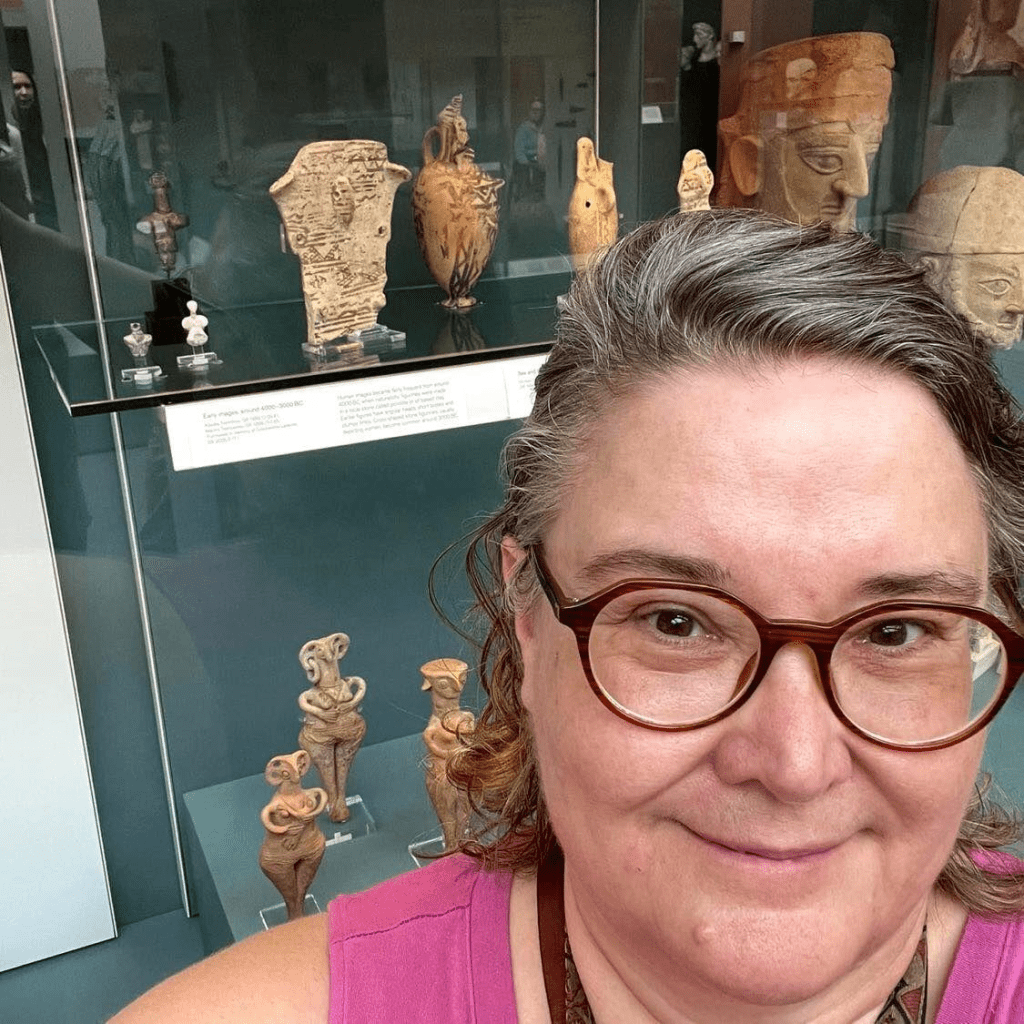
Local interfaith minister, artist and scholar Patricia Robin Woodruff has been accepted to speak at the Parliament of the World’s Religions in Chicago, Illinois, in mid-August 2023.
The Parliament of the World’s Religions is a nonprofit consisting of “the world’s largest, most diverse and inclusive interfaith Covening of people of faith, spirituality and goodwill,” its website states.
It is headquartered in Chicago because it is the site of the first Covening of the World Parliament of Religions took place in 1893 as a part of the World’s Fair.
Woodruff’s talk is titled “The Land is Our Mother: The Indigenous Beliefs of the Slavic Lands,” which initially started as a look into her own heritage.
She knew that her maternal line lived in the Carpathian Mountains on the edge of Slovakia and Poland.
People are also reading…
- Crooked Road names new executive director
- Smyth grand jury hands down indictments
- Ukrainian refugees find home and hope in Rich Valley
- Board weighs donation for ‘coloring outside the lines’
“I knew they were Slavic and I began to wonder, ‘What did the ancient Slavs believe?’” Woodruff said.
In the course of her studies she obtained her master’s degree in Divinity and a doctoral degree in Metaphysical Theology. Woodruff has been working on a series of books documenting all of her research of which the August presentation is just a small bit of.
“My presentation gets into the concept of “Mother Nature” and “Mother Earth” that is woven throughout the belief systems of the lands that we now know as Slavic,” Woodruff said.
Woodruff’s goal is to show that our ancestors — by perceiving the earth as a mother figure — took a respectful and caring approach to farming, herding and forestry, she said.
“If you think of the earth as a mother generously providing food and shelter for us as her children, this also generates a reciprocity where one takes care of the earth and her resources.”
Woodruff’s research follows the evolution of spiritual practices, leading her to a number of stories, some close to her current home.
“I recently came across a really fascinating connection between Slavic-Germanic lore to the Quesinberry family of Floyd,” Woodruff said. “In the Polabian lands, which was an overlap of Slavic and Germanic culture, there is the town of Questenberg.”
She came across the fact that Quesinberry and other variations of this name such as “Questenberg,” “Questenbury,” etc originated from this town. Their ancestor Count von Questenberg built a castle there.
Woodruff said, “All Quesinberrys are descended from the Count’s son, Tielmann von Questenberg born around 1380, who helped keep [a spiritual] ancient tradition going.”
By presenting at the Parliament of the World’s Religions Woodruff’s goal is to bring awareness to the deep roots of these ancient beliefs.
“I can trace this “Mother Earth” concept back at least 30,000 years. The Slavic beliefs really only lost this a couple hundred years ago,” Woodruff said. “I want to show that when we go back to thinking about the earth as our mother this will cause us to take better care of the Earth and each other.”
Woodruff’s books can be found on her Amazon author page and at www.PatriciaRobinWoodruff.com.
She is also known locally for her book, Strange Tales of Floyd County, VA carried at Sacred Star and Stone on north Locust Street.
Patricia Robin Woodruff: Featured in The Wild Hunt Pagan Community Notes
In May or early June of 2024, you will be hearing all about cicadas in the news but they might not mention the Pagan connections. You may also be overwhelmed with the sound of them “singing” since two different groups will be emerging at the same time. Cicadas will spend a period of time underground…

New Book Release 2024: Roots of Slavic Magic Book 1
It’s released!! Ten years of full-time research. Over 500 pages, 274 illustrations, almost 2,000 citations AND an index! Book 1 of 10 volumes of The Roots of Slavic Magic. – Patricia Robin Woodruff Woodruff reveals exciting new discoveries in this vastly neglected field. Scholars have long overlooked the pre-Christian beliefs in the area of Central…
Lord of the Mountain: Krakonosh
He has been described as a giant, a devil, a gnome, an elf, a prince, a satyr, a goblin, and a ghost. Some call him a great spirit. Some refer to him as a great lord. Where else would such a great being live but in the Giant Mountains?! If you’ve never heard of the…
Talking My Path: Patricia Robin Woodruff
Originally posted at: Talking My Path: Patricia Robin Woodruff – ev0ke (ev0kepublication.com) [Welcome to our column, Talking My Path. Here, polytheists, witches, and Pagans of any tradition are invited to discuss and celebrate their spirituality in a series of five short questions. If you would like to participate, don’t hesitate to email us at ev0kepublication@gmail.com.]
evOke: How do you define your particular tradition or path? Does it have a specific name?
Patricia Robin Woodruff: My name is Patricia “Robin” Woodruff, although my Slavic relatives call me Paraska. I practice the magic as it has come down in the Slavic lands. There are Slavic Pagan belief systems called Rodnovery or Runvira and Staroverči, all of which translate essentially to “Native Faith” or “Old Believers.” They focus on re-establishing Pagan self-determination based on their country extricating itself from the control of the USSR. This tends to create a focus on Nationalism and boundaries.
I follow the indigenous religion from before there were countries and city-states. Because the Slavic lands were relatively ignored by the surrounding dominant cultures, it provides the best view back into the indigenous beliefs. But you have to remember that Slavic is a language and this belief system goes back to before the Proto-Indo-European languages split (which happened around 4,500 BCE). It is based on a mind-set of abundance and the cycle of life. Everyone is connected, so those well-off should care for those less fortunate. It revolves around the same concept of self-determination, but expands beyond the artificial borders we create. Key concepts are connection, truthfulness, generosity and hospitality.
For example… You greet people with bread and salt, which becomes a sacred compact between the guest, the host and witnessed (and upheld) by the Goddess and God which created the grain. The salt provides the magic of preservation. This seals the compact that the host will be generous in providing whatever is needed and the guest will honor those in the home, never harm them, and do what they can to help their hosts.
Indigenous religions tend to be shamanic, because one becomes deeply connected to the spirits and the land. So individuals who are deeply called to this path are called “one who knows” or “wise one” in whatever language is being used. (That’s basically what shaman means, “to know.”) In Russian it would be vedma, in Ukrainian it’s vid’ma, Polish wiedzma (although czarownica has become more popular, because the “wise one,” the witch, has been so maligned), and in Hungary you would use boszorkány.
My last name is Woodruff, but my maternal ancestors were Lemko, with names like Pronczak, Krupiak, Chromczak, and Wasylak. Lemko is a little-known culture of the Carpathian highlands. The Carpathian mountains run along the border of Slovakia and Poland, near the edge of Hungary and into Romania and Ukraine. So I am a spirit-initiated Lemko bosorka, which basically is Lemko for a sort of shamanic witch.
So I’ll give you a really short version of how I came to this path. I am an ordained minister of the Wisdom of the Heart Church, as well as a Second Degree Priestess in Stone Circle Wicca (USA). As part of our training we were asked to research our own ancestral traditions. As I said, my maternal line comes from the Carpathian mountains which is considered Slavic. So I started researching the pre-Christian beliefs of the Slavs.
I was finding out there is this whole pantheon which I had never heard of! I was so excited to find out about these beliefs, but there really weren’t any good books in English on the topic. So, I started collecting little bits and pieces from websites, plant name origins, research papers … which led to me wanting to put together a reference book for my own sake. Then I wanted to share this cool stuff, so I thought I’d publish it. Well … that one book has turned into two small, published books and five in-depth books that I’m working on simultaneously and that I hope will be coming out soon. But in the course of this research, I’ve made some ground-breaking discoveries. So, I’m also gathering information for about twenty academic research papers, and I’ve almost finished with my PhD in Metaphysical Theology.
evOke: Which Deities, powers, or other spirits are honored in your tradition?
PRW: If you look up Rodnovery, you’ll come across a whole collection of gods and goddesses that most people have never heard of before. But my research has taken me deeper and further back in history. I’ve found that just as the languages stemmed from a common root, the deities did, too. But that’s a much longer explanation that I can give here, which is why I’m working on a whole book series about it.
Some Pagans will reject the idea of this sort of “family tree” of deities, but I need to clarify that just because one understands the roots of words of Proto-Indo-European, that doesn’t negate Polish, or Sanskrit, or Slovenian. I think it gives it more depth and makes these discoveries even more exciting! And I think you gain a deeper understanding of the different faces of deity by understanding how the goddesses and gods developed to meet the needs of their people.
So I’ll tell you about one of my favorite faces of the Goddess who is one of the oldest and all-encompassing … Siva (also called Zhiva, Diva, Vita and many other titles), but Siva just means “Life.” The earliest deities presided in a climate of abundance, so Siva is almost always smiling. She provides all the fruit and bounty of the earth: golden apples, bunches of grapes, and golden honeycomb. She is fertility and love and joyful sex and the breast-feeding bountiful mother, so she is usually depicted nude. She is the midwife of birth as well as death and rebirth. She is the Goddess of fairness and justice yet is still filled with kindness and compassion. She wears a crown of flowers, or ripe wheat. Siva pushes up the flowers, causes babies to be born, and keeps the balance of nature. She is the Animal Mother before she split into Gimbutas’ Paleolithic Bee Goddess, Deer Goddess, Bird Goddess, and Bear Goddess.
Connecting with the land spirits is also a large component of this belief system. In Slavic tradition, fairies are called veela or samodiva, and Siva is their “queen.” These beautiful maidens are often depicted with swan-like wings, or riding the deer in the forest. The spirits of the river are called rusalka or berehynia and are said to look like beautiful maidens who are also naked with their long hair hanging down. There are the hairy leshi who are guardians of the forest and can change their size. And all of these spirits are shape-shifters and can appear as anything they choose, although they have their favorite shapes. One must develop a relationship with the spirits in order to become a ved’ma or borsorka, because the only way to become “one who knows” is to be spirit initiated. You can be taught the practices as a hereditary magic worker, or you can study it on your own, but the shamanic initiation comes from the spirit world.
Ancestor veneration is also an important part of this ancient belief as it is in any shamanic tradition, so the ancestors are especially honored at the liminal times of the year, most notably Zaduszki or Ancestors Day (which the Celts call Samhain), the Winter Solstice (called Koliada), and the time around May Day (Jorë). The holiday names that I use are from different Slavic languages, but I picked the ones that best sum up the meaning of the holiday. This is where I’m really going to differ from someone practicing Rodnovery, because to me, the country lines that people draw are merely arbitrary. As I said before, the practices are drawn from before the languages split up, so from my perspective looking at a religion dating back at least 16,000 years and spanning the areas of Old Europe into Turkey, Iran, Egypt, India, Kazakhstan and even into Mongolia, individual languages become irrelevant.
evOke: Among the various festivals and holy days celebrated in your tradition, which is the most important to you, and why?
PRW: I can’t really tell you which one is the “most important,” but my favorite is May Day, or more accurately the Cross Quarters Day around May 5th which is the “Gate of Summer.” In the ancient times before agriculture, the year was simply divided in half between the celestial cross quarter days of May 5th and November 5th. People familiar with Celtic Paganism would call it Beltane to Samhain. At the beginning of May is when the herds of goats and later sheep and cows would be taken up to the lush mountain pastures. And then they’d be brought in around the end of October, beginning of November. You can see this in the traditions of Serbia, which is still a herding culture. So Jorë (May Day) is a time for fresh new beginnings and joyful celebration. There’s a lot of overlap with Celtic and Slavic celebrations, but they used different words, of course.
I’ll use the English term May Day or the Lithuanian holiday name of Jorë, because it’s the most accurate. It’s from Jorë that we originally get the word “year.” It is the beginning of the year and the celebration of the Goddess and God of Spring, called in the Slavic lands Jarilla and Jarillo or Vesna and Vesnič, or by their titles of Lada and Lado.
So this May Day celebration is a huge, joyful celebration of spring and fertility and new life! A statue of Jarilla is crowned with wild dog roses or viburnum flowers (snowball bush). This is why the Catholic Church crowns the statue of the Virgin Mary at the beginning of May, because of this ancient Slavic tradition. But Jarilla is no virgin! Viburnum is also called cramp bark and is good for all kinds of “women’s things.” And the sweet-scented dog roses were associated with love and joyful sexual activity. All that fertile activity running rampant during the “lusty month of May”!
evOke: Which texts, websites, or other resources would you recommend to someone interested in your tradition?
PRW: The Facebook page, The Roots of Slavic Magic, which provides an inclusive environment for learning about the various faces of the Slavic deities and their ancient roots, and is safe from the taint of white supremacists. They wouldn’t understand the magic anyway, because it winds up being all about connection. The ancient indigenous faith is all about being connected to the land, to each other, to the animals and plants … really, to the energy of life. As I said, that’s what Siva’s name means … “Life.” And her partner Seibog is the male god of life.
There’s not much in the way of good books on the topic. The only ones I could probably recommend are The Bathhouse at Midnight; Radomir Ristic’s book Balkan Traditional Witchcraft which focuses on just a small area; and The Dancing Goddesses by Elizabeth Wayland Barber (although she tries to just treat the topic historically). These are well researched books and not white supremacist propaganda which you need to watch out for. I’m a really fast reader, so I’m speaking from the experience having read over two hundred books and over four thousand research papers on the subject.
Two more pretty accurate sources are MagPie’s Corner on Facebook by Olga Stanton, and Old European Culture Blogspot by Goran Pavlovic.
evOke: Is there anything you would like to add, such as creative projects you are undertaking, festivals or events you will be attending, and so on?
PRW: I’ll be attending the Sacred Space Conference, April 2020 in Hunt Valley, Maryland, although I’m not presenting this year. I’ll be presenting at the Midwest Shamans Conference in 2021, in North Madison, Ohio. I’m usually at most events run by the Stone Circle Council in the PA/DC/Maryland area and often either presenting or running a Slavic ritual. Their information can be found at StoneCircleCouncil.org
I’m also working constantly on my book series, The Roots of Slavic Magic. I’m working on five volumes all at the same time. I hope to get the first volume proofed and out the door this summer.
However, I have published a small book on Slavic Magic Moon Meditations, which is perfect for right now because it starts with the first new moon after the Spring Equinox. I’ve also published a kid’s book, The Prince with the Golden Hand in my kids series, Baba’s Secrets of the Old Ways. This book is good for adults, too.
You see, when the Pagan clergy was evicted from the towns by the incoming Orthodox religion around 800 CE, the clergy hid themselves by becoming traveling minstrels. In Russia they were called skomorokhi. They traveled around leading the (Pagan) holiday celebrations, or doing the Pagan rituals after the priest had done his bit for weddings or funerals. These minstrels had their magical healing bears, and told Pagan teaching stories that have come down to us as fairy tales. So in my Baba’s Secrets series, a young girl’s grandmother (Baba) tells a story and then explains to her grandchildren the ancient lore behind it. This is all fascinating Pagan stuff that has been hidden in plain sight all these years! The next book in the kids series will be the secrets behind Hansel & Gretel, but I have to get my academic paper on it published first. (They like to get first dibs.) To find out about my new books you can select “Follow” on my Amazon author page.
Biography
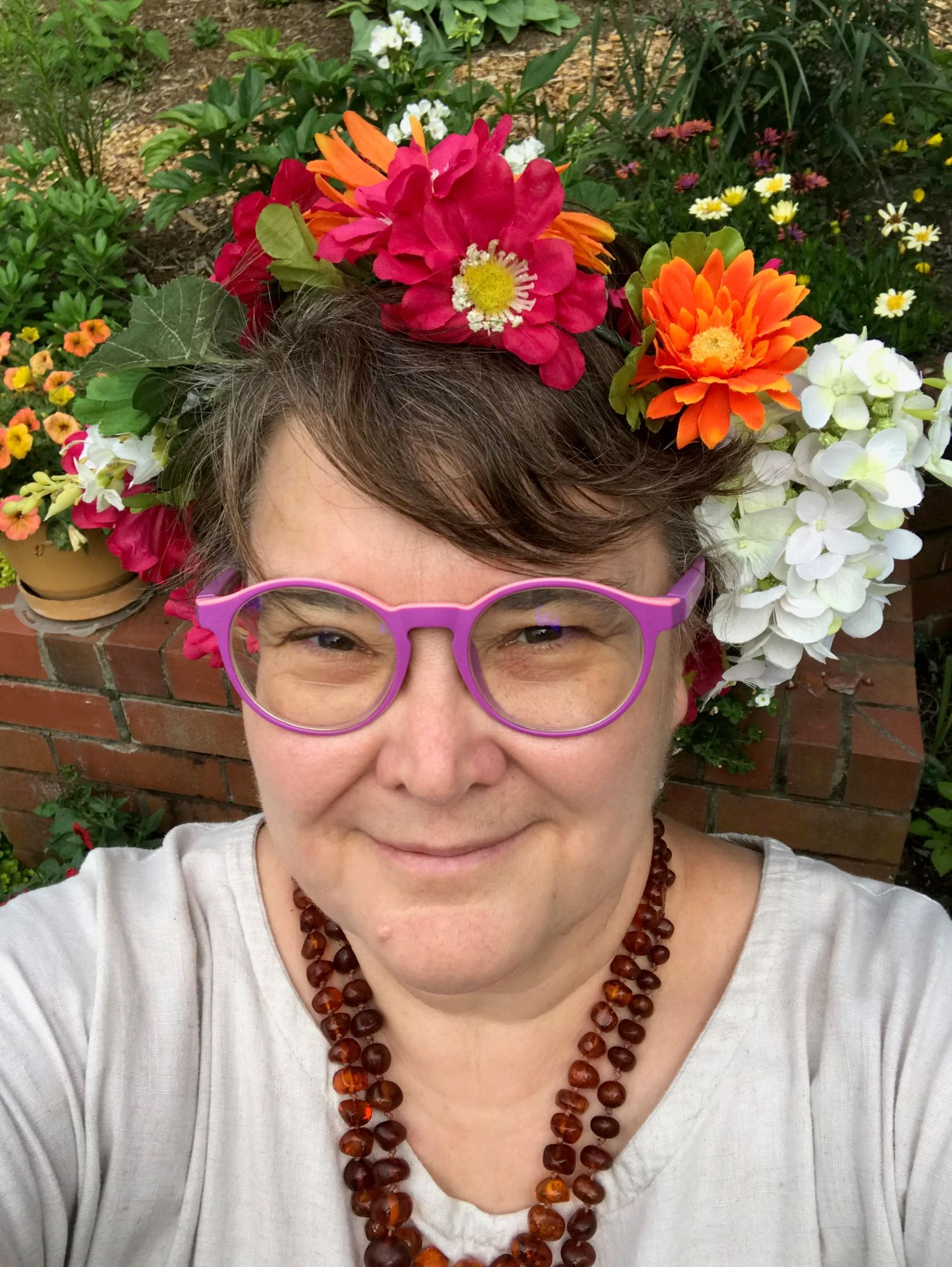
Patricia Robin Woodruff, PhD, b. 1966 in Philadelphia, PA. Philosopher of Metaphysical Theology. Author of Roots of Slavic Magic Book 1: Deities and Their Worship (2024), Woodruff’s Guide to Slavic Deities (2020), The Prince with the Golden Hand (2019), Slavic Magic Moon Meditations (2018), The Call of the Spectacled Owl: An Artist’s Journey thru History, the Amazon, and Spirit (with Travel Tips) (2016), and Strange Tales of Floyd County, VA (2007.) Woodruff is currently working on completing a book series on the Roots of Slavic Magic; providing new insights into this ancient religion based on recent archeological discoveries and revised scholarly analysis of petroglyphs from the areas influencing the proto-Slavs.
Woodruff is a polymath interested in art, archeology, ethnobotany, literature, neuroscience, parapsychology, theology, history, science and spirituality. She is also an avid bibliophile and autodidact, as well as an artist and writer. During the Spring term 2013, she engaged in a course of self-study in Rome, Italy, focusing on the art and spirituality of the area. Along with that, she visited the major megalithic temples and the Hypogeum on the islands of Malta dedicated to an ancient fertility goddess.
In 2014, she embarked on a course of study that resulted in a certification of Priestess of Stone Circle Wicca and her ordination as a minister. Fall of 2015 she got an introduction to traditional medicines and ritual from a shaman in the Amazon jungle. She was able to visit several sacred sites and the Museo Larco’s extensive collection of shamanic whistling vessels. This resulted in a book about the history and spirituality of the area.
Since 2016, Woodruff has been deeply immersed in studying the roots of Slavic earth religion, along with the magical practices, spirits, and deities of the culture. Woodruff’s interdisciplinary studies and multicultural spiritual studies provide a unique insight into the ancestral religion of her Carpatho-Rusyn heritage.
She has a Masters of Divinity and PhD in Metaphysical Theology from the University of Metaphysical Sciences (2020).
RESEARCH INTERESTS
- Slavic Deities
- Cross-Cultural Studies
- Slavic Mythology
- Ethnobotany
- Paganism
- archeology of early Slavic
AFFILIATIONS
University of Metaphysical Sciences, Metaphysical Sciences, Post-Doc
 patriciarobinwoodruff.com